Stories
Veteran's Bucket List Dreams
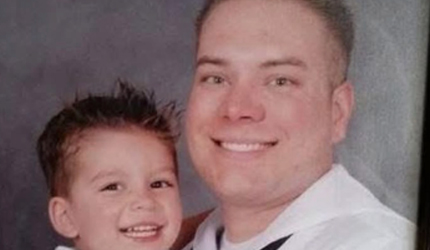
My name is Matthew Black. I retired from the Michigan Air National Guard in February 2026 after serving 20 years.
I began my career in Vehicle and Equipment Maintenance in 2006 as an Airman, then moved in 2008 to Electrical Power Production, where I served until my retirement as a Master Sergeant.
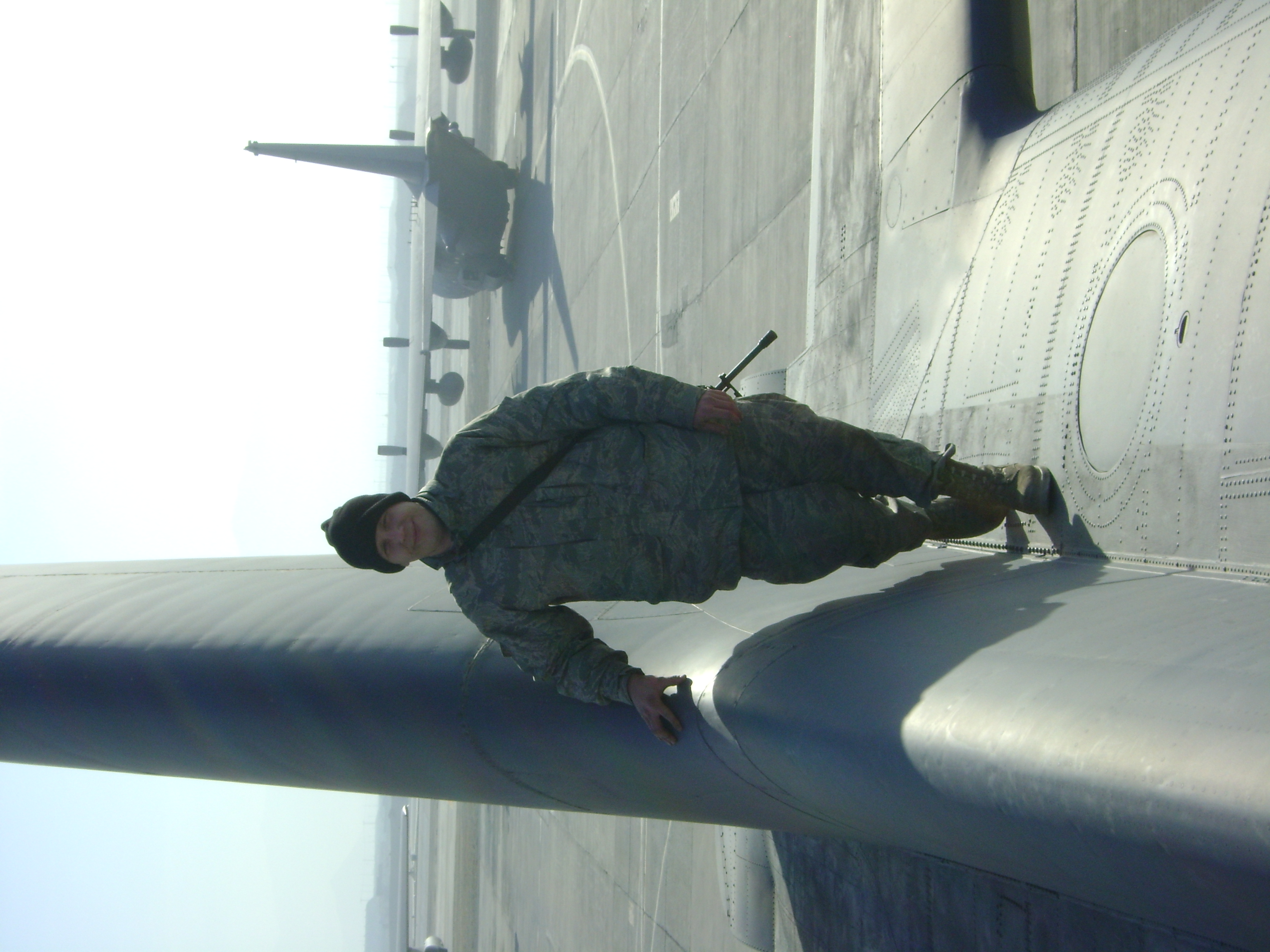
I deployed overseas to Afghanistan for Operation Enduring Freedom and to Kuwait for Operation Freedom Sentinel. I was assigned to the 127th Civil Engineering Squadron out of Selfridge Air National Guard Base.
My awards include the Army Commendation Medal and the Air and Space Achievement Medal.
I worked full time as an Air National Guard Technician and, in 2019, transitioned to a position with the Federal Aviation Administration.
Some of my hobbies include spending time with my wife and dog, hunting, and working on my old car.
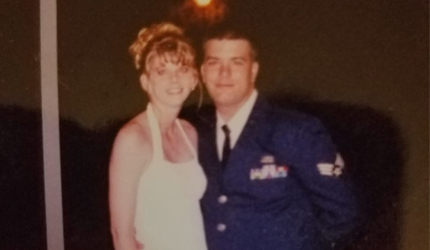
Born in Tecumseh, Michigan, and raised in nearby Onsted, I grew up as one of five siblings, with one brother and three sisters. I graduated from Onsted High School in 1992 and enlisted in the United States Air Force that same year. After completing HVAC/R technical training at Sheppard Air Force Base in Wichita Falls, Texas, I received my first duty assignment to Misawa Air Base in Japan.
I spent three years in Misawa, where I re-enlisted for an additional six years. During that time, I learned to ski and took full advantage of every opportunity to travel, exploring Japan, the Philippines, and Korea. Living overseas sparked a deep appreciation for different cultures and laid the foundation for a lifelong love of adventure.
My second assignment took me to Aviano Air Base in Italy. Before heading overseas, I returned home on a 30-day leave and met the woman who would later become my wife. While stationed in Italy, I continued skiing and joined my squadron’s downhill ski team. I traveled extensively throughout Europe, visiting France, Germany, Poland, Slovenia, and Austria, and even went on a wildlife safari in Kenya—an experience I will never forget.
My third and final assignment brought me to Mountain Home Air Force Base in Idaho. Before reporting for duty, I returned home to get married. Idaho quickly became one of my favorite places. I continued skiing and rediscovered my passion for hunting, harvesting both a mule deer doe and buck—though the elk always seemed just out of reach. My wife and I enjoyed our time there so much that we seriously considered making Idaho our permanent home.
Near the end of my service, I deployed to Saudi Arabia for six months and later spent time in Kuwait. In 2000, we welcomed our first child, and in 2001, after nearly a decade of service, I separated from the Air Force.
Today, I have been married for 27 years and am the proud father of three boys. Two have graduated from Onsted High School, and our youngest has just begun his freshman year. Looking back, I am grateful for the experiences, the places I’ve been, and the people I’ve met along the way—memories that have shaped both my life and my family.
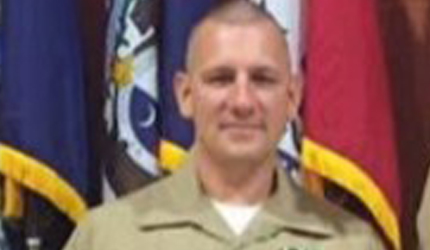
Steve is a Michigan native who graduated in 1986 from Belleville High School in Belleville, Michigan. After graduating high school, Steve followed in his older brothers’ footsteps by joining the United States Marine Corps.
Steve was assigned to squadron VMFA-235 “Death Angels” as a hydraulics technician on the F/A-18 Hornet, stationed at Marine Corps Air Station Kaneohe Bay, Hawaii.
After Iraq’s invasion of Kuwait in August of 1990, Steve’s squadron was deployed to Shaikh Isa Air Base, Bahrain, in support of Operation Desert Shield. Once Desert Shield transitioned to Desert Storm, VMFA-235 shifted to offensive roles, flying more than 800 sorties from Shaikh Isa and expending over two million pounds of ordnance in strikes against Iraqi command facilities, airfields, and defenses, as well as providing close air support and suppression of enemy air defenses for the I Marine Expeditionary Force.
Half of the squadron’s F/A-18 sorties were allocated to the Joint Force Air Component Commander, contributing to the broader 3d Marine Air Wing effort of more than 18,000 fixed-wing sorties. Specific actions included escorting A-6 Intruders armed with AGM-88 HARM missiles and conducting a pre-offensive show-of-force mission along the Kuwaiti border. No aircraft or personnel losses were recorded for VMFA-235 during the campaign.
Steve transitioned from military life in the Marine Corps in 1991 to an accomplished 32-year career in federal law enforcement. The majority of that time was spent serving as a Special Agent with the Department of Health and Human Services, investigating Medicare fraud, and later with the Department of Homeland Security, Office of Inspector General.
Steve married one of his high school sweethearts, Iris, and they have two sons, Steven and Matthew. Steven followed in his father’s footsteps and served in the United States Marine Corps for five years and is now pursuing a career in civil aviation. Matthew has recently started a position as a Special Agent with the Department of Homeland Security.
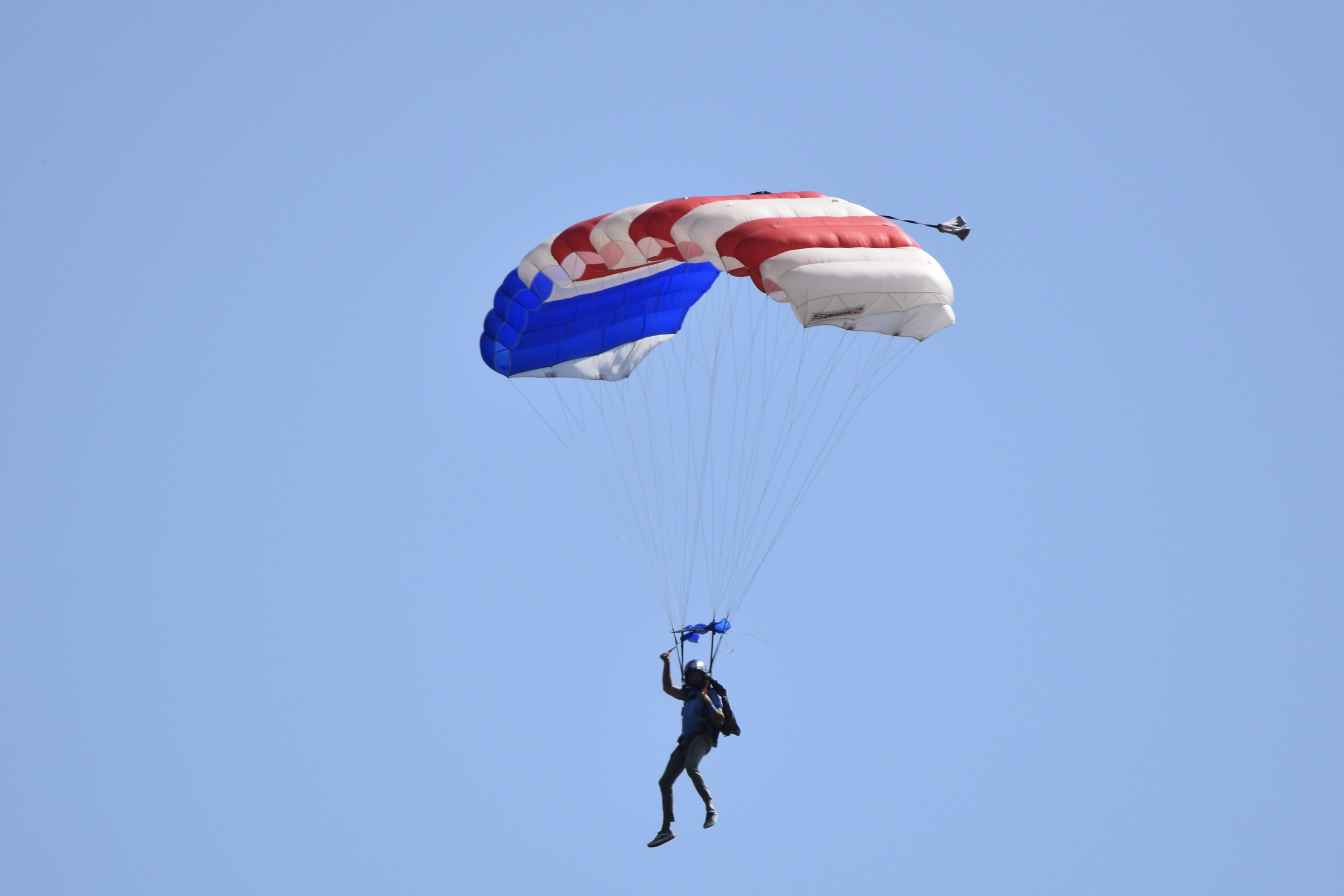
Steve is now retired (maybe), and enjoys spending time with his family—especially his granddaughter, Viviana. He stays active by playing lots of golf, doing Pilates with his wife, teaching firearms skills with 2 Vets Development Group (https://2vdg.org), and skydiving at Skydive Tecumseh. If he’s not on the golf course, look to the sky.
Ozzie is a U.S. Navy veteran and lives in Battle Creek, Michigan. He spends much of his time volunteering with Disabled Veterans of America and Vets Helping Vets. He is 100% disabled due to Agent Orange exposure.
During most of his active-duty service, he was assigned to Naval Fleet Air Reconnaissance Squadron One (VQ-1). He served with this unit from January 5, 1966, to August 20, 1968, and later transferred to the Electronic Warfare Department of VQ-1.
The primary mission of VQ-1 was to provide tactical fleet electronic intelligence support for Commander, Seventh Fleet (COMSEVENTHFLT) in Southeast Asia. This mission included identifying threats from surface-to-air missiles (SAMs) and MiG sites.
Fleet Air Reconnaissance Squadron One personnel provided direct support to military ground and air combat command operations in Southeast Asia.
Ozzie states, “I am honored to say that I supported my fellow servicemen and women during the Vietnam War.” As noted above, he has continued throughout his life to lend that same support.
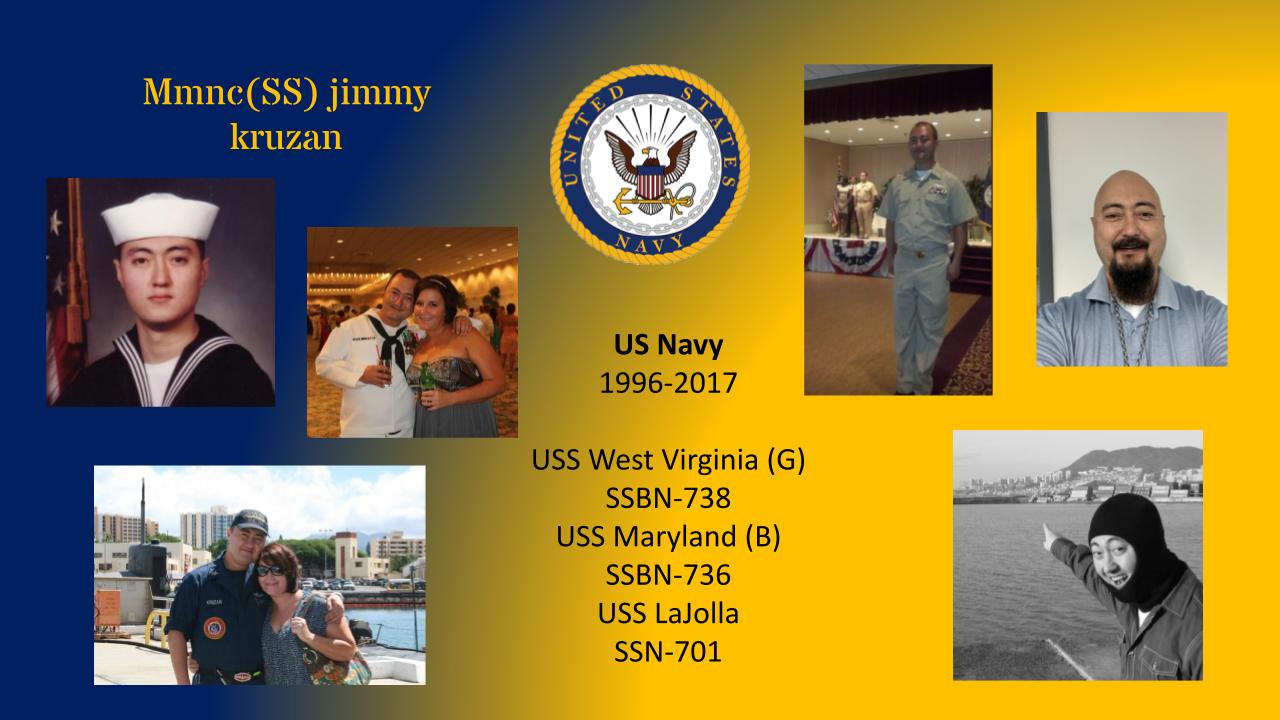
MMNC(SS) RET James Kruzan
James was born in Seoul, Korea, and moved to Augusta, Georgia, at a very young age. He was raised by his mother and stepfather, who served four tours in Vietnam. After attending college for one year without much success, James and his cousin walked into a Navy recruiter’s office, where he learned about the Navy and its Nuclear Power Program. He decided to pursue that opportunity.
James found that the structure the military provided, along with the camaraderie, was exactly what he was looking for. While serving, he developed a passion for teaching and training other sailors. He went on to serve for 21 years, completing assignments on five different submarines, spending a combined total of two years underwater, and training well over 5,000 sailors during his tenure in the Naval Nuclear Training Program.
After retiring from the Navy, James chose to remain in the nuclear field and continue his work in training and instruction. He is currently the Technical Training Supervisor at Fermi 2 Nuclear Power Station in Newport, Michigan.
During his service, James also developed a strong commitment to community service, which he continues today through involvement with several veteran service organizations. He currently serves as Quartermaster of Veterans of Foreign Wars Post #1138 in Monroe, Michigan, and is also a board member of the DTE VETS Energy Resource Group.
Adam is a Michigan native, born in Michigan and raised in Memphis, Tennessee. He graduated from high school in Germantown, Tennessee, in 1999. In the fall of that year, he moved back to Michigan to be closer to family and enrolled in a community college. Shortly thereafter, he felt a calling to serve.
Both sides of Adam’s family have served in the United States military. His maternal grandfather was a military police officer during World War II. His paternal grandfather served in the U.S. Army Air Corps during World War II and later as a tank commander in the Korean War. Adam’s father served as a supply sergeant in the Army during the Vietnam era and later transitioned into communications, serving a total of 17 years. Both of Adam’s brothers enlisted in the Army—Kevin, the oldest, as an engineer, and Brian as a chaplain’s assistant.
In December 2000, Adam enlisted in the United States Marine Corps as a rifleman (0311). He attended Marine Corps Recruit Depot San Diego and, upon graduation, was sent to the School of Infantry at Camp Pendleton, California. Adam then reported to his duty station with the 4th Marine Division, 1st Battalion, 24th Marines, Charlie Company, out of Lansing, Michigan.
In 2003, Charlie Company was sent on official orders to Kuwait in support of Operation Enduring Freedom. In March of that year, the unit moved north for the invasion of Iraq during Operation Iraqi Freedom. There, Adam and his fellow Marines conducted multiple missions, including Forward Arming and Refueling Points (FARP) operations, the Battle of Nasiriyah, operations at the air base in Kut, Iraq, and providing physical security for numerous missions.
What began as a group of strangers became a brotherhood. The life and times of a Marine Corps infantryman have been told countless times, yet every story is unique. Adam’s story is viewed through a lens of mixed emotions. One of those emotions—loss—took many years to fully recognize. The sense of camaraderie and brotherhood often felt lost in the civilian world. Another enduring value was honor. The standards to which his platoon and company held themselves differed greatly from those he later encountered outside the military.
After returning home, Adam initially moved forward without much reflection. He found employment with the Defense Logistics Agency (DLA) as a cataloger for military supplies. Over time, a coworker noticed behaviors consistent with post-traumatic stress. Following several DUI incidents and multiple unsuccessful attempts to confront his struggles, Adam was court-ordered to undergo a PTSD evaluation.
Since then, Adam has achieved goals he once thought unattainable. He now serves within the DLA as a Physical Security Specialist. He attended Purdue University and earned a Bachelor of Science degree in Fire and Emergency Management. He also holds the Security Fundamentals Professional Certification (SFPC), Anti-Terrorism Credential (ATC), and Physical Security Credential (PSC) from the Center for Development of Security Excellence.
Adam has been married to his wife, Ashley, for 11 years, and together they have two energetic young sons, Oliver (9) and Sawyer (7).
Adam previously served as the Program Lead for the Battle Creek Project Healing Waters Fly Fishing program for four years and is one of the founding members of the Holy Waters Tournament in Grayling, Michigan. He finds true peace in the woods, where he hunts white-tailed deer and turkeys, and occasionally enjoys upland bird hunting.
Michael E. Ulch devoted more than thirty years to public service through parallel careers in the United States Marine Corps and the Michigan Department of Corrections. His life reflects a continued commitment to leadership, mentorship, and service to fellow veterans.
Ulch joined the United States Marine Corps Reserve in 1994 and began his civilian career with the Michigan Department of Corrections in 1999. Rising through the enlisted ranks, he achieved the rank of First Sergeant and retired from the Marine Corps in 2020 after 26.5 years of service, including multiple combat deployments.
His military service included deployment as an Infantry Unit Leader during the 2003 invasion of Iraq, Operations Chief in western Iraq in 2006, and Battalion Operations Chief in Senegal, Africa, in 2012, in support of peacekeeping and security operations. He also participated in Joint Task Force missions supporting federal, state, and local law enforcement in counter-drug operations along the southern border of the United States.
Following his military retirement, Ulch continued serving veterans through his work with the Michigan Department of Corrections. As the Veteran Liaison Specialist, he serves as the department’s subject matter expert on veteran services, helping connect employees, families, and justice-involved veterans with resources, opportunities, and pathways to continued success.
A graduate of Michigan State University, Michael Ulch married his wife, Jamie, in 1997. They have three children: Hannah, Logan, and Nolan.
Jeffrey Dean Preseau honorably served the United States for 22 years, from 1985 to 2015, in both the U.S. Navy and the U.S. Coast Guard. He completed nine years of active-duty Navy service, followed by 1.5 years in the Navy Reserve, and later served 2.5 years on active duty and 16 years in the Coast Guard Reserve, retiring at the rank of Second-Class Damage Controlman.
Throughout his career, Jeffrey worked as a Hull Technician and Damage Controlman, contributing to shipboard safety, maintenance, and operational readiness. His service included three Mediterranean deployments, two North Atlantic cruises, and numerous Caribbean drug enforcement operations, including participation in the liberation of Kuwait.
His awards include two Navy Achievement Medals, a Coast Guard Achievement Medal, the Armed Forces Reserve Medal with Mobilization, the Coast Guard Special Operations Ribbon with Bronze Star, three Sea Service Deployment Ribbons, and several additional commendations. Jeffrey is proud to have served his country, following in the footsteps of his grandfathers and uncles, and considers it an honor to serve.
Outside his military service, Jeffrey enjoys hands-on, outdoor pursuits that reflect the same craftsmanship and dedication he brought to his career. His hobbies include woodworking and creating custom military shadow boxes, as well as fishing and hunting. He also enjoys spending time grilling and smoking Southern-style barbecue for family and friends, taking pride in both the process and the tradition behind it.
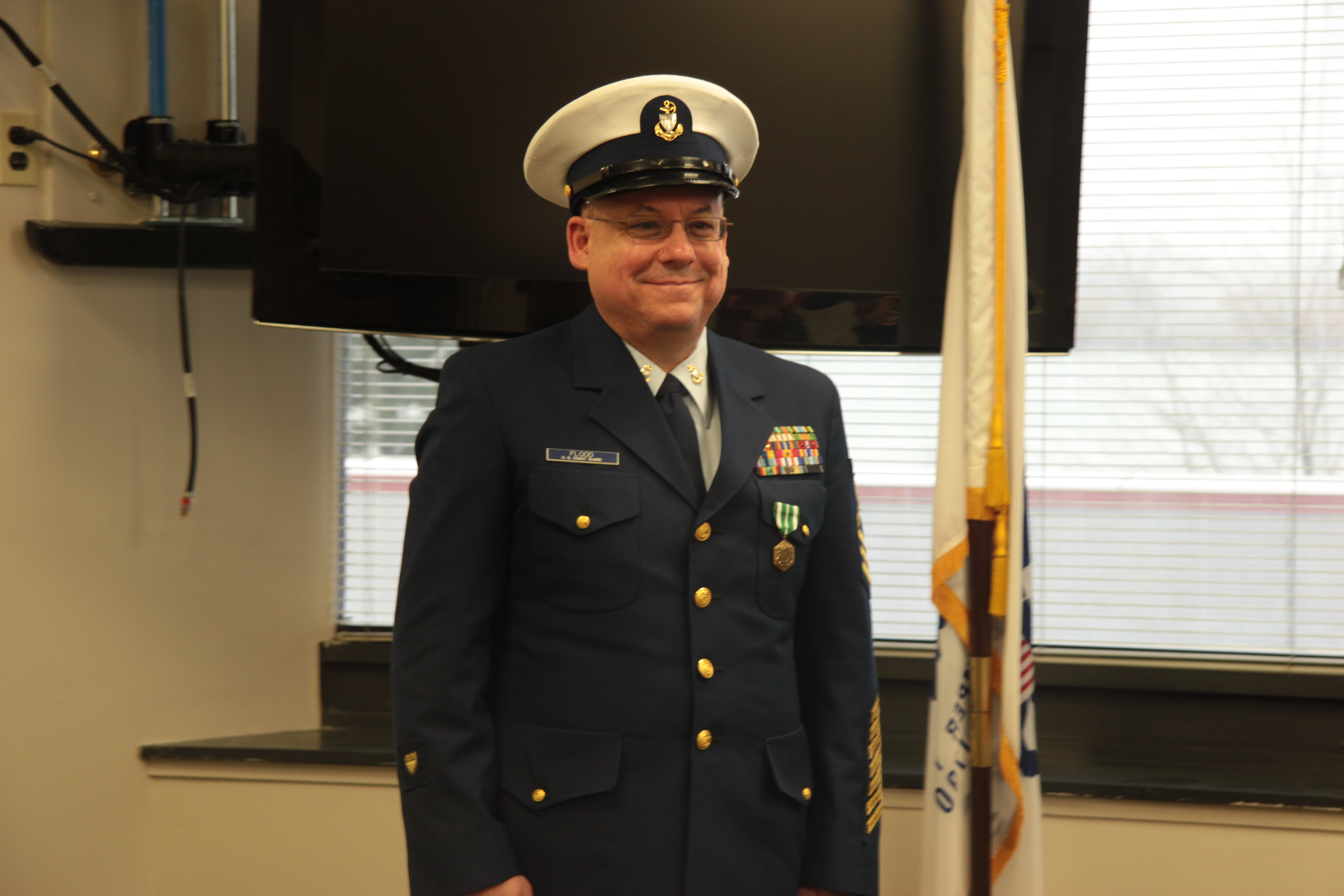
I was born in Detroit, Michigan, to Virginia and Paul Flood. My father was a retired U.S. Postal Service worker, and my mother worked at Hudson’s Department Store in the shoe repair department. Both are now deceased. I have one sister, Colleen. My father was a World War II veteran of the U.S. Army Air Corps. He wanted to be a pilot but had a speech stutter, failed the pilot entrance exam, and instead served as a rear tail gunner on a Mitchell B-25 for four years in the China Theater.
I am currently married to Marie Elene Flood, a retired U.S. Coast Guard veteran with 20 years of service. I met my wife while serving in the Coast Guard, and together we have two children, Patrick and Suzanne.
In 1965, when I was 11 years old, my family moved to Bay City, Michigan. I graduated from Bay City John Glenn High School in 1973. I spent much of my youth hunting pheasants along irrigation ditches in sugar beet fields near our subdivision. I only ever harvested one rooster pheasant and eventually turned to duck hunting at Fish Point in Unionville, where coots were plentiful.
I attended college both before and after my military service, working whenever possible as I was largely on my own. I graduated from Kalamazoo Valley Community College in 1981 with an Associate of Science degree. At the time, good-paying jobs were scarce, and my parents suggested military service as a way to gain employment and additional funding for school.
After separating from the U.S. Navy in 1985, I returned to college and attended Saginaw Valley State University, earning a Bachelor of Arts degree in Economics. I also enlisted in the Coast Guard Reserves and used the GI Bill to help fund my education at SVSU.
While serving in the U.S. Navy, I was stationed aboard the USS Claude V. Ricketts (DDG-5) as part of the Sixth Fleet, homeported in Norfolk, Virginia. During 1983–1984, the ship was part of multinational forces operating off the coast of Beirut, Lebanon. We provided naval gunfire support following the bombing of U.S. Marine and French headquarters. I initially worked in First Division and later transferred to the ship’s office (personnel) to learn the Yeoman rating.
During my Coast Guard service, I was stationed at Reserve Unit Saginaw River, spent two years aboard the USCG Cutter Bristol Bay, and worked in Ohio at Marine Safety Unit Toledo’s Regional Exam Center. I served as Chief Petty Officer Yeoman and supervisor at Coast Guard Sector Detroit’s Reserve Administration and Personnel Office. My final assignment was mobilization for the Deepwater Horizon oil spill in 2010 in New Orleans, Louisiana, where I worked logistics at Coast Guard Air Station New Orleans. I retired from military service in 2012 with 30 years of combined service.
While serving in the Coast Guard Reserve, I also held a federal civilian position as a Senior Paralegal Specialist with the U.S. Department of Justice, Office of the U.S. Trustee, Detroit Field Office. I retired from the Department of Justice in 2022.
Since retiring, I have enjoyed spending time with my wife and children and traveling. My wife and I visited Alaska in 2022 and completed a European tour in the summer of 2025.
In my spare time, I play trumpet with the Royal Oak Community Concert Band. My trumpet playing—much like my hunting skills—is one of the few pursuits that has stayed with me throughout the years. I enjoy fishing of all kinds, including walleye fishing on the Detroit River. My wife enjoys panfishing for bluegill and crappie, and we fish throughout the state of Michigan. I also own a drift boat and fish for trout, salmon, and steelhead. I am fortunate that my wife often joins me in my outdoor pursuits.
James T. Banning, Sgt., U.S. Air Force
Bruce Banning, founder of Bucket List Dreams, is the author of my brother’s story, as James passed away at an early age—in his mid-50s.
Jim… Jimmy… James… “Jungle”… however you knew him, he was born in 1948, the first of three children born to James and Dorren Banning. I was the second-born, and our brother Gary was the third. We were raised by two of the greatest people who ever lived—members of “The Greatest Generation.” We had a wonderful childhood, growing up in World War II-era tract housing during the 1950s. The ’50s were pure paradise in America. We were raised with discipline, structure, accountability, and, most importantly, standards.
I was comfortable with those standards, but Jim struggled a bit. He simply wasn’t very “neat.” He didn’t care much about pressed clothes or polished shoes, but he did better than average in school and had a strong work ethic. He was shy and compensated for it by being the funniest guy in the room. He often showed up at parties and events wearing hilarious costumes. He was popular, well-liked, and his circle of friends gave him the nickname “Jungle,” after the 1950s Hollywood character Jungle Jim.
After graduation, and to avoid the draft, Jim enlisted in the U.S. Air Force. He completed boot camp in Texas and then moved on to technical school. That is where things began to get interesting—and mysterious.
While Jim was in tech school, our parents began receiving phone calls from people all over our hometown of Monroe, Michigan. They were being visited by FBI agents. The agents came to our home for a lengthy interview and spoke with nearly everyone in Monroe who had ever known Jim. The military clearly had something in mind for him—something we were never able to define or understand—and Jim would never tell us. We never knew exactly what he did in the Air Force.
Jim’s military service was cloaked in mystery, and in many ways, he never truly left the service. He was required to remain ready for recall for the rest of his life. When he passed away, we found all of his uniforms stored away in perfect condition—shoes shined, everything ready to go at a moment’s notice.
We knew he worked in top-secret locations, underground or behind multiple locked doors. He once told me—asking that I not share it with our mother—that if the United States were ever taken over, his commanding officer was to shoot him, the others he worked with, and then himself.
This cloak of mystery followed him into civilian life. If he needed surgery, he was required to notify the FBI. On one occasion, he underwent a hernia repair, and sure enough, an FBI agent showed up and did not leave until Jim had fully recovered from the anesthesia and regained full cognitive capacity.
I believe this secrecy ultimately took a heavy toll on his life. Jim never married, lived alone, and led an almost hermit-like existence. He was always in control of himself—rarely drank, was extremely reserved, avoided risks, and had few close friends. He often ate meals at our parents’ home and saved his money to the point of frugality, though he was generous with his nieces and nephews. He lived conservatively in all things. Whatever secrets the government required him to carry, I believe they were more than he was meant to bear.
Jim died in his mid-50s. I have always felt sorrow for the life he lived. Compared to me—someone who often pushed boundaries—it seemed Jim never truly lived. I have long felt it was unfair for the government to place such a burden on one person and expect lifelong silence and loyalty. Others in his position may have walked away after their service, but Jim took his obligation seriously and remained loyal until his death.
One final moment stands out. During a family dinner, the conversation turned to UFOs—whether they were real or fictional. Jim said nothing until the discussion slowed. Then he calmly stated, “They are real. I can tell you they are real.” He offered no explanation and expected the subject to be dropped, which it was.
Who knows the truth. What I do know is this: Jim might have been better off being drafted and serving a short term in the Army. Perhaps his life would have been more fulfilled. What is certain is that everyone in our family loved him deeply, and he is still greatly missed.
Walter H. Banning, Jr. — as much as we know about him.
Created by Major T. Frederick, the Devil’s Brigade was an elite World War II commando unit—the First Special Service Force (FSSF)—composed of U.S. and Canadian soldiers. The well-known 1968 film takes significant historical liberties, blending real missions with fictionalized characters and events for dramatic effect, though it does capture the spirit of this legendary unit known for its tough, cold-weather warfare. The unit was activated on July 9, 1942.
The unit’s motto was the German phrase “Das dicke Ende kommt noch!”, which translates to “The worst is yet to come!” This motto also served as a form of psychological warfare. FSSF soldiers carried cards bearing the unit insignia and motto and would leave them on dead German soldiers as a warning to their comrades.
The Devil’s Brigade fought during the 1944 landing at Anzio, the siege of Monte Cassino, and the invasion of southern France. The unit contributed to the capture of approximately 7,000 prisoners and inflicted an estimated 12,000 German casualties. They earned numerous citations and commendations and were known for being vicious, determined fighters. They put what was often described as “the fear of God” into the ranks of German soldiers as they fought their way through Italy and into southern France, leaving devastation in their wake.
There were several “waves” of fighters assigned to the Devil’s Brigade. The initial wave consisted of those trained and commissioned when the unit was first activated, followed by reinforcement waves as casualties mounted. Training continued after activation to replenish the ranks. Walter H. Banning became a member during the second wave of fighters assigned to the Brigade.
My name is Bruce Banning. I am the founder of Bucket List Dreams for Veterans, and Walter H. Banning was my uncle. To us, he was simply known as “Uncle Dub.”
Uncle Dub grew up in Arkansas City, Kansas, with my father and two sisters. Life was difficult, as they endured the hardships of the Great Depression. Survival required toughness, and Uncle Dub had plenty of it. He liked to fight and was often in trouble for beating up others. In many ways, he was a perfect fit for the Devil’s Brigade when he joined the Army.
We do not have many details about Uncle Dub’s military service, but we believe he demonstrated his willingness and ability during boot camp, which likely led to his selection for the Brigade. After completing Brigade training, he was immediately sent to Europe to join the fight.
We do not know exactly where or how long he fought with the Brigade, but during the brutal fighting at Anzio, Uncle Dub was severely wounded. As we understand it, he spent approximately a year in hospitals in Europe before being sent home and discharged, no longer able to fight.
The post-war years were difficult for Uncle Dub. He never married and lived alone. He became an alcoholic. I remember that, from time to time, my father would receive calls from their mother asking him to speak with Dub. My father seemed to have some influence over him—perhaps because they had both served in Europe—and was often able to calm him down. Uncle Dub had encounters with local law enforcement but never committed offenses that resulted in serious jail time.
When I was eight years old, our family made the long trip from Michigan to Kansas to visit our relatives. One of the most memorable parts of that trip was spending time with Uncle Dub. Years later, my mother told me that the family said it was the only week they could remember when Uncle Dub did not drink. He wanted to be with me and my brothers, and he clearly wanted to make a good impression.
I am convinced that Uncle Dub was a good man, much like my father. Sometimes, however, war takes so much from a person that recovery becomes impossible.
Uncle Dub died young. He never fully recovered from his injuries and suffered deeply, using alcohol to cope with his pain. He was not the first to do so, certainly not the only one, and sadly, he will not be the last.
Any way you look at it, Uncle Dub gave his life for his country. He fought hard—hard enough to be part of one of the most elite fighting forces the United States has ever known.
Born and raised in Michigan, I come from a long line of family members who have served in the military. Both of my brothers served in Iraq, my father served in Vietnam, both grandfathers served in World War II and Korea, and one grandmother and great-grandmother served during World War II.
As an undisciplined 18-year-old in need of direction, I joined the Army directly out of high school through the Delayed Entry Program in 1987. I served as a 71M, Chaplain’s Assistant. Life was good. I was initially stationed in the nation’s capital, Washington, D.C., wearing dress blues and driving high-ranking officers.
I was later stationed in Korea with the 2nd Infantry Division, where I went from wearing dress blues one day to wearing BDUs and sleeping in a tent on the DMZ the next week. Just before reaching my third year in the Army, I was stationed at Dwight D. Eisenhower Army Medical Center in Georgia. After nearly five years of active duty, I decided to leave the military, attend college, and begin a new career.
I credit my time in the military with giving me the maturity, mission, and discipline needed to complete a four-year degree while working full time. I earned a Bachelor of Fine Arts in Ceramics (who knew?) and graduated with a 3.98 GPA—quite a contrast to my high school GPA of 2.0. During my first year of college, I met my future wife, Jennifer. We recently celebrated 31 years of marriage.
After completing my studies, I spent the next 20 years traveling the United States selling my pottery at fine art shows. The leadership and discipline I gained in the military were critical to my success as an entrepreneur and artist. Unfortunately, the COVID-19 pandemic led to the mandated shutdown of art shows and abruptly ended my dream career. However, I soon discovered a silver lining while seeking new employment.
I was fortunate to find a position at WACO Classic Aircraft Corporation, where I now build wings for 1930s-era biplanes. Fourteen veterans work at WACO, and the camaraderie among us is incredible. The shared experiences, hardships, and humor are the benefits of belonging to a close-knit military community.
Do I believe everyone should serve their country for a minimum of three years? Yes. Although I chose the military and loved every minute of it, not everyone is meant to serve in the armed forces. That said, I believe service should take many forms—schools, hospitals, or national parks, to name a few. Opportunities to work outside one’s comfort zone, integrate with people beyond one’s local community, and help others without direct personal benefit are key to personal growth and to making our country a better place.
In my free time, you’ll find me outdoors. I enjoy fishing, hunting, gardening, hiking, camping, and collecting rocks.
My name is Mike Smalley. I am 55 years old. I went into the military when I was 17. School was just not my thing, so my parents signed for me to enlist. Mind you it took me a lot of convincing especially with my dad because he was Vietnam Veteran. I went to basic training in Fort Dix, New Jersey. I really don’t have much to say about that except that when I went over to Desert Storm, I noticed that both places smelled the same… lol. I was originally an 88mike truck driver. I was in the process of switching to be a MP when I got the call one night… I volunteered to join a unit that was going over in a week. I was 19 years old. I drove armored trucks with bombs on the back up to wherever they needed them and would do security on other convoys in a hum-v with an M60 on top. I spent 9 months over there and luckily; I only had a few hairy situations. When I came home, the parades and everything was so nice, but it was funny… all I thought about was my Dad and all the other Vietnam Veterans who came back home to neglect, resentment, and abuse. I worked 35 years total in various types of construction… there's a long list of trades I worked in. I am now 100% disabled. I get along OK. Hunting and fishing is my passion. I have a wonderful wife who has stayed by my side for almost 30 years… through thick and thin. That pretty much sums up my life. I am just a simple man but I wouldn't change anything about my life.
I was born in Waynesboro, PA., in a beautiful valley of South Mountains, part of the Appalachians with my parents and three sisters until 1962 when my father’s job was transferred to Battle Creek, MI. I graduated from Lakeview High Scholl and attended Kellogg Community College for a couple years. I married in 1965 just four months prior to my receiving my Congratulations! Letter from the Selective Service.
I enlisted in the U.S> Army in March 1967 with basic training at Fort Knox, KY. My advanced training was at Aberdeen Proving Grounds, MD. Specializing in ordinance supply. After finishing AIT I was transferred to Ft. Lewis, WA. What a beautiful post. There our unit prepared for Vietnam.
We arrived in Qui Nhon, Vietnam in September 1966. Qui Nhon is a large costal city on the South China Sea about midway up the Vietnam coast. I was part of the advanced party, meaning myself and a SFC Neeson were to arrive before the unit to make arrangements for our assignment. But as it turned out, the unit arrived first.
Our cargo plane, with the unit’s equipment, had one mechanical problem after another. So, we island hopped to Hawaii, Guam, Wake, Phillip pines, then Vietnam. Interestingly, the Army had no idea who we were, why we were there, and what battalion we were assigned to!
The Company was assigned to work at the supply depot in Qui Nhon. Shortly thereafter, due to other soldiers rotating back to the States, our unit became the filler for those troops. I ended up in An Khe, a town in the Central Highlands, located on the base with the First Air Cavalry Air Mobility. The unit was a platoon sized unit supporting the Cav, 4h Infantry, Special Forces, and others. Two weeks prior to my return to the States I was injured in a crane accident.
During my tour, my wife had our first child, a boy. It was tough being thousands of miles away. But letters and pictures kept my spirits up.
My State-side duty was a Nike Hercules missile artillery brigade outside Chicago, IL. Yes, there were missiles along Lake Michigan as a defense mechanism. It was great duty and close to our home in Battle Creek. Our second son was born while stationed here.
Two years after my enlistment was over, I signed up for an Army Reserve Civil Defense Support unit in Battle Creek. A small unit to start with, only 12 troops. But due to a change in the allowances, we were upgraded to 32 troops. Rank positions improved and I let my enlistment end due to a job transfer to Europe where no positions for my rank were available.
I loved the military. I love the Army. I would do it again, although a little differently. There are huge opportunities to learn skills you thought were not available. And now, with the acknowledgements of all veterans, including Vietnam, I am proud to be part of it.
When I asked my daughter to help me write my biography, she said something that struck me deeply:
“Steve Spector is many things — a proud Clevelander, the kind of Police Officer I’d want protecting my city, a motorcycle enthusiast, a wonderful father. But above all, Steve Spector is what it means to be an American Veteran.”
Early Life
My name is Steve Spector, and I was born and raised in beautiful Cleveland, Ohio — the only son of a lawyer and a stay-at-home mom, growing up alongside three spirited sisters.
From a young age, I had a knack for adventure and a tendency to stir up mischief. My parents received more than a few phone calls from teachers and neighbors about the latest escapade I’d gotten into. But beneath that rebellious streak was a deep respect for my elders — especially my grandfather, a proud World War II Army Infantry Veteran. I admired him immensely and developed a lifelong respect for his service in the U.S. Army.
A Call to Serve
After graduating from Grand River Academy in 1979 and spending a year at Northwood University, I made a decision that would shape the rest of my life: I enlisted in the United States Army.
For six years, I served as a Crash Rescue Specialist, stationed in Honduras, El Salvador, Nicaragua, and Western Germany. My job was intense and often dangerous — responding to downed helicopters, rescuing injured comrades from wreckage, and battling fires that threatened lives and missions.
It was high-stakes work, but it gave me something I never expected: a profound sense of purpose.
Lessons from the Military
The military didn’t just shape my career — it reshaped my soul. I learned discipline, respect, and the importance of the chain of command. I grew under the guidance of seasoned leaders and discovered strength I didn’t know I had.
I faced challenges that tested my spirit and witnessed losses that left lasting scars. No training prepares you for the heartbreak of losing friends who never made it home.
Life After Service
After my military service, I continued my commitment to public service by becoming a Police Officer in East Cleveland. Later, I retired and started my own screen printing and embroidery business.
Today, I live in Florida, where I enjoy the freedom of riding with the Copperheads Motorcycle Club and spending time with my loyal white German Shepherd.
A Veteran’s Advice
If I could offer one piece of advice to anyone considering military service, it would be this: serve.
Every man and woman should experience the growth, discipline, and honor that come with wearing the uniform. It teaches you how to do things the right way, how to respect others, and how to carry yourself with integrity — lessons that stay with you for life.

Information
Bucket List Dreams was founded by a disabled Veteran who observed that military service can often impact ones quality of life.